
Cloud Architecture & Migration
Infrastructure designed around your application's real requirements, or migrated cleanly from an existing environment, on AWS, Google Cloud, or Azure, chosen based on what actually fits.


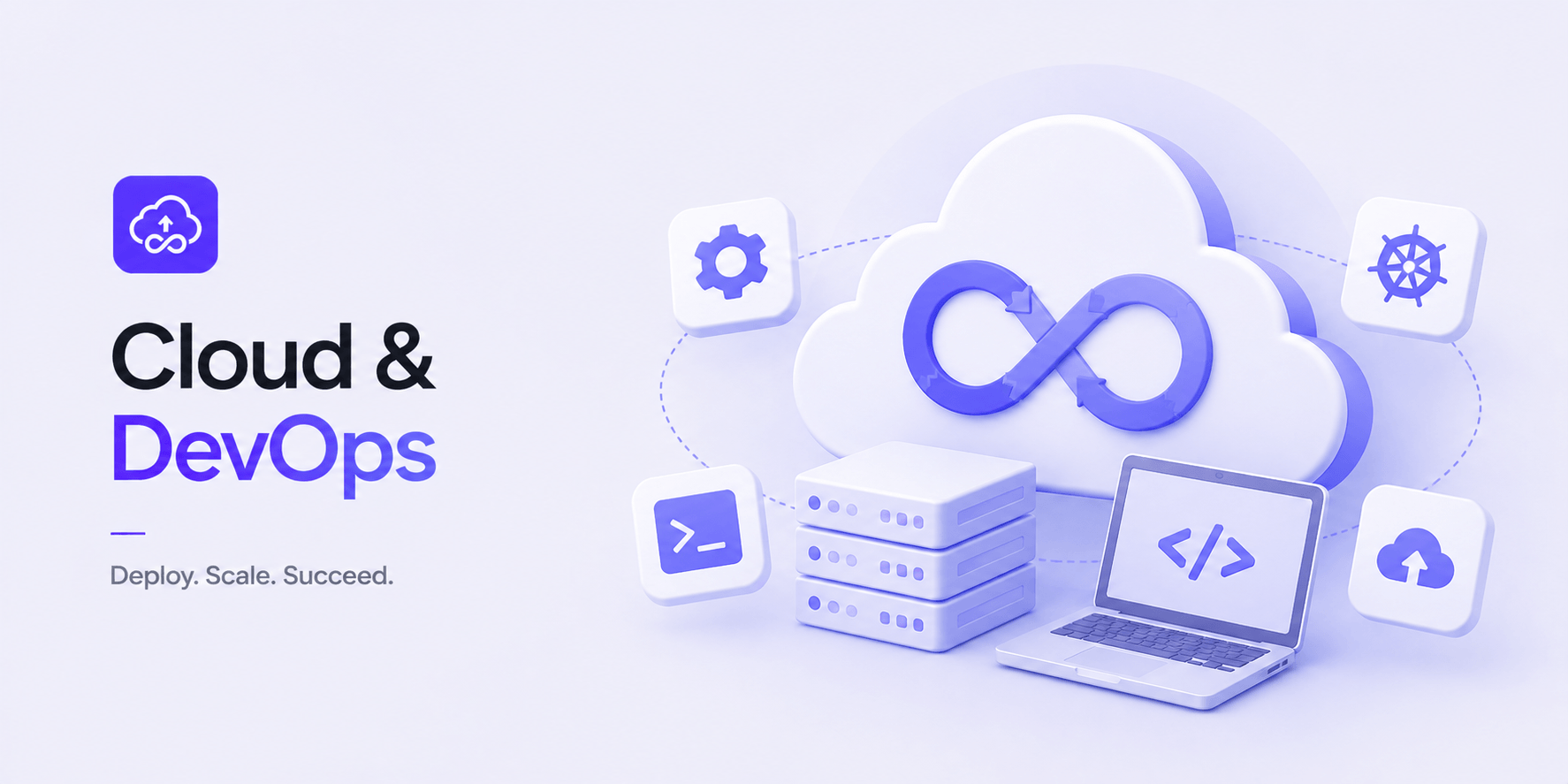
Infrastructure is one of the few parts of a business where a mistake doesn't show up as a bug report. It shows up as a bill nobody can fully explain, an outage at the worst possible moment, or a security gap nobody finds until it's already a problem. Most companies don't have an infrastructure strategy so much as an accumulation of decisions made under deadline pressure, a server spun up to solve one problem, a script written to patch another, none of it ever stepped back from and actually architected on purpose.
We treat infrastructure as a real engineering discipline, not a background task handled by whoever's available. That means capacity planned around actual expected load, not a generous guess left running and unmonitored. Cost visibility built in from day one, tagging, budgets, alerts, so a bill is something the team can see coming, not something that arrives and requires an investigation. Security designed into the architecture itself, least-privilege access, proper network isolation, encryption, rather than bolted on as a checklist after something's already live.
Whether the right foundation is AWS, Google Cloud, or Azure depends on what you're actually running and what you're already invested in, not a default we reach for regardless of the project. A data-heavy, machine-learning-driven product has different needs than an organization already deep in the Microsoft ecosystem, and we'll recommend honestly based on your actual situation, not a one-size answer. The same goes for how the infrastructure itself is built, containerized with Docker, orchestrated with Kubernetes when real scale and complexity justify it, or kept intentionally simpler when that complexity isn't earning its keep yet.
Every infrastructure engagement we take on is judged by whether it holds up under real conditions, not whether it looked fine in a review. Infrastructure defined as code, documented, reproducible, so it isn't dependent on one person remembering how something was configured. We also tell you honestly when your current setup is over-engineered for what you actually need, because the goal isn't the most sophisticated infrastructure possible, it's infrastructure that's actually right-sized for your business.
Infrastructure designed around your application's real requirements, or migrated cleanly from an existing environment, on AWS, Google Cloud, or Azure, chosen based on what actually fits.
Applications containerized with Docker and orchestrated with Kubernetes when real scale justifies it, built for reliability and automated recovery, not complexity for its own sake.

Automated build, test, and deployment pipelines that turn shipping code into a routine, low-risk process, not an event the team quietly dreads every release.

A full audit of what's actually driving your cloud spend, with right-sized infrastructure and real, ongoing visibility so costs stay predictable instead of surprising you every month.
Least-privilege access, proper network isolation, and encryption built into the architecture itself, with real attention to the compliance requirements that actually apply to your industry.
Environments defined as code, version-controlled and documented, so your infrastructure's actual state is visible, reproducible, and never dependent on any one person's memory.
We assess your current infrastructure honestly, cost, security, scalability, then architect a plan matched to your real usage and growth, not a generic best-practice template.
Infrastructure gets defined as code, with CI/CD pipelines and monitoring built in from the start, so deployment and scaling become routine, not something anyone has to think hard about.
We keep watching real cost and performance data after launch, refining continuously so the infrastructure stays right-sized as your business actually grows, not provisioned for a guess.
Let’s scope your project and put the right team on it.